Statewide Overview
Feral Hogs in Texas
Population size, growth rate, county coverage, and documented damage — pulled from the same published sources this tracker cites everywhere else. No estimates of our own.
The Numbers at a Glance
Texas population estimate
More than 3 million wild pigs
Texas A&M Natural Resources Institute (April 2026)
Texas counties reported present (2024 dataset)
250 of 254 — not Dallam, El Paso, Hansford, or Sherman
Texas A&M Natural Resources Institute (April 2026)
Reported crop-damage cost estimate
Nearly $700M (2021) across 6 surveyed crops in 11 states
McKee, Mayer & Shwiff 2024, Agriculture 14(1):153
How Many Feral Hogs Are in Texas?
Texas holds more than 3 million wild pigs — more than any other state, and roughly half of the national total. The 2024 dataset reports feral hogs present in 250 of the state’s 254 counties.
Source: Texas A&M Natural Resources Institute (April 2026); Texas A&M AgriLife Extension for county coverage.
National technical (modeled) estimate: ~6.3 million wild pigs (range 4.4–11.3 million). Source: Mayer 2014, USDA/OSTI technical report — a modeled estimate, not a current census.
How Fast Does the Population Grow?
Feral hog population growth is modeled, not fixed. A 2012 Texas A&M AgriLife model (SP-472) found modeled scenarios ranging from up to 28% annual growth with no removal down to a flat population at about 66% annual removal sustained over five-plus years — Texas’s estimated 2010 statewide harvest was about 29%. A single sow can produce up to three litters a year, which is why removal has to keep pace. The Growth Calculator applies these published scenarios to your own acreage.
Source: Timmons, Higginbotham, Lopez et al. 2012, Texas A&M AgriLife Extension / Natural Resources Institute (SP-472); Texas Parks & Wildlife Department on litters.
Are Any Texas Counties Free of Feral Hogs?
Four counties — Dallam, El Paso, Hansford, and Sherman — simply aren’t reported as having a present population in the 2024 dataset. That’s not the same as being documented hog-free, and it isn’t evidence of a control-success story; it just means that dataset didn’t report presence there. Every other county (250 of 254) has a documented population.
Source: Texas A&M Natural Resources Institute (April 2026).
What Does the Damage Cost?
A 2024 peer-reviewed study estimated nearly $700 million in annual (2021) damage costs to producers of six crops across eleven surveyed U.S. states — not a full U.S.-wide crop-damage total. That is materially larger than the older ~$52 million Texas-only figure still quoted in many places, but it measures a different, narrower scope than "all U.S. crop damage."
Source: McKee, Mayer & Shwiff 2024, Agriculture 14(1):153.
Damage is not only agricultural. Hog activity is linked to disease exposure and measurable water-quality impairment in Texas watersheds — the Health & Environmental Risk page documents those figures with direct source links.
Finding Activity Near You
This tracker publishes county-level activity for Texas, with a reviewed date on every record and a downloadable one-page fact sheet per county. Regional reporting is collected on the In the News page, and the full sourcing and review process is written up on the methodology page.
Texas Feral Hog Field Guide
Visual references for identifying adult feral hogs, striped piglets, and the commonly confused collared peccary.
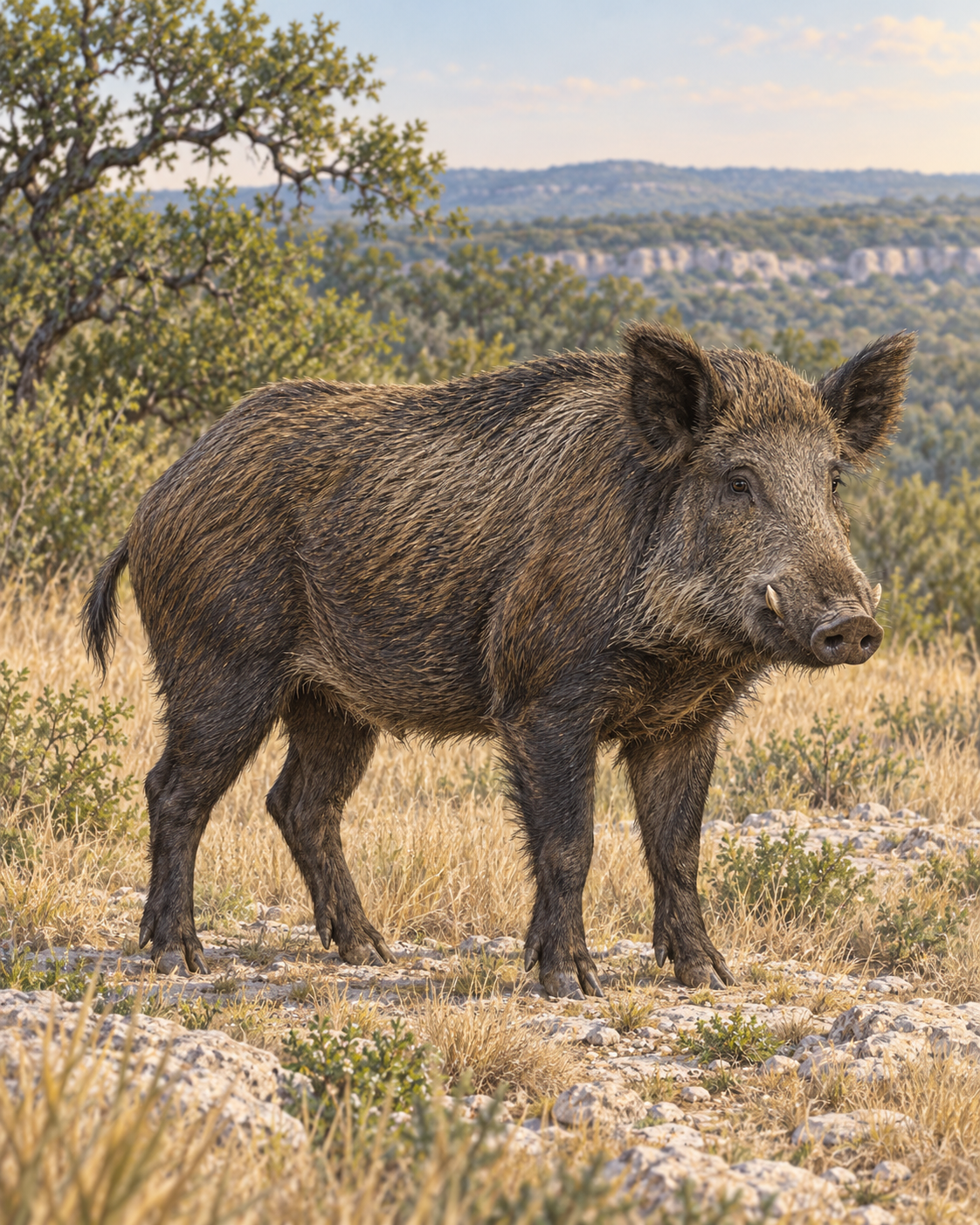
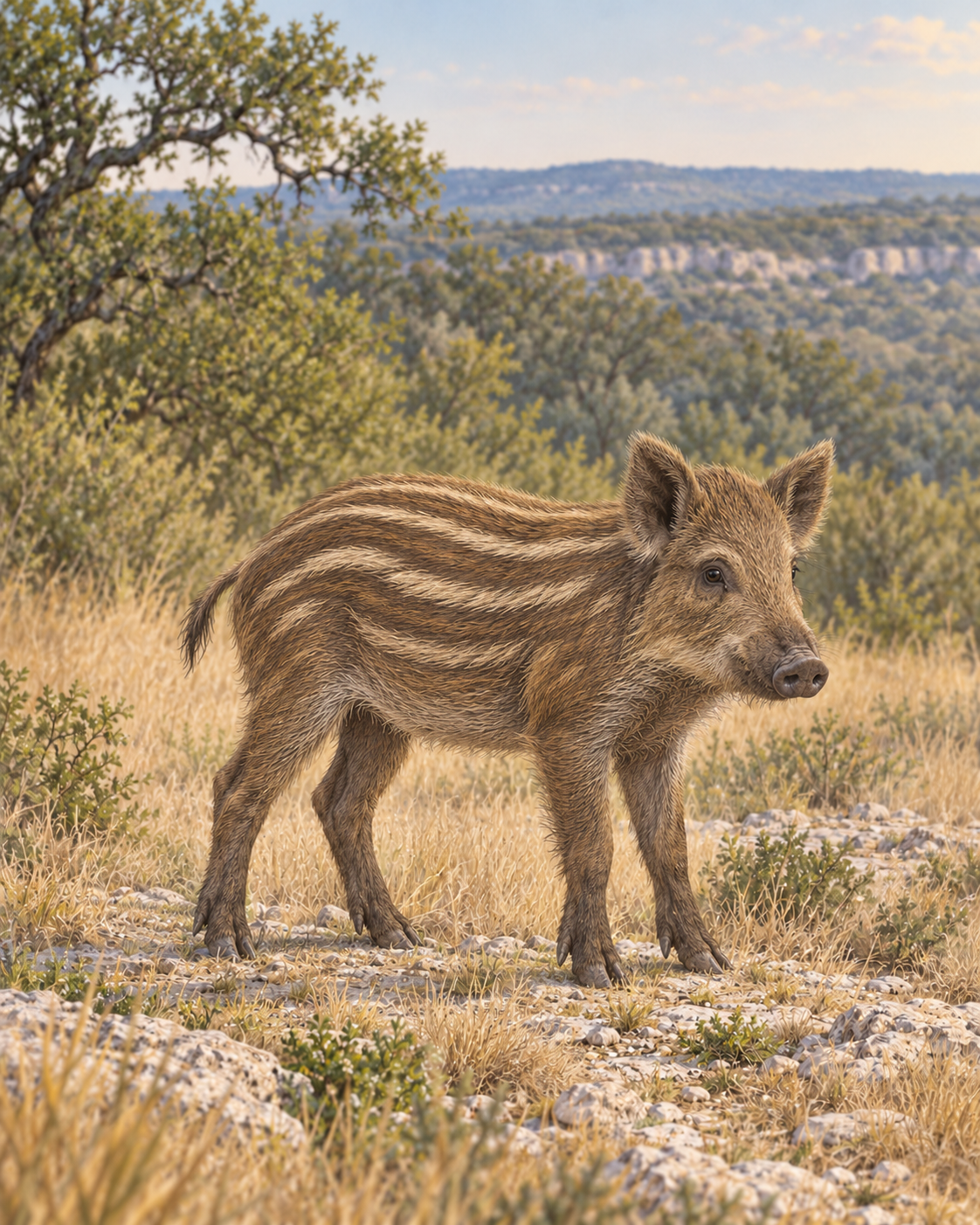
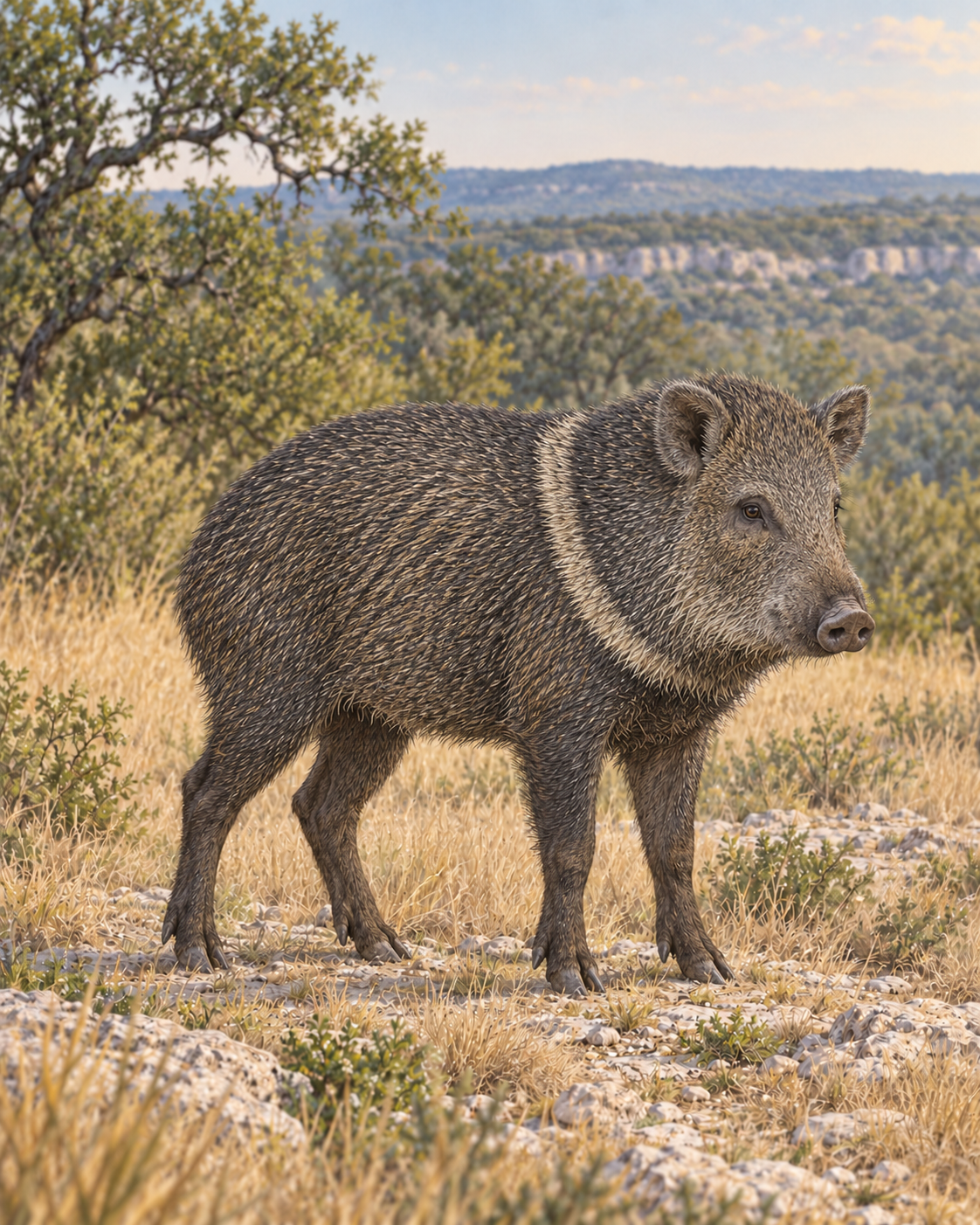
Illustrations — illustrated identification references, not photographs of documented sightings.
Common Questions About Feral Hogs in Texas
- How many feral hogs are in Texas?
- More than 3 million wild pigs. Estimates vary by year and methodology, and Texas holds the largest share of the national population.Source: Texas A&M Natural Resources Institute (April 2026)
- How many wild pigs are in the United States?
- A national technical (modeled) estimate puts the population near 6.3 million (range 4.4–11.3 million). This is a modeling estimate, not a current census.Source: Mayer 2014, USDA/OSTI technical report
- Were any Texas counties not reported to have feral hogs?
- Yes — Dallam, El Paso, Hansford, and Sherman were not reported present in the 2024 dataset, which reports hogs present in 250 of 254 Texas counties. That isn't proof those four counties are permanently hog-free, an improvement, or evidence of control success — it simply reflects what that dataset reported.Source: Texas A&M Natural Resources Institute (April 2026)
- How much damage do feral hogs cause each year?
- McKee and colleagues estimated nearly $700 million in annual costs to producers of six crops across eleven surveyed states for 2021. The estimate includes costs beyond direct crop losses; it is not a total for all U.S. wild-pig damage.Source: McKee, Mayer & Shwiff 2024, Agriculture 14(1):153
- How fast does a feral hog population grow?
- A widely cited historical model found that sustained removal of up to about 66% of a population annually, over 5+ years, could hold a modeled population stable under that study's assumptions; Texas' estimated statewide harvest in 2010 was about 29%. This tracker's growth calculator uses that same modeled framework — it is not a universal yearly mandate, and it does not claim every untreated population grows by a fixed rate.Source: Timmons et al. 2012, Texas A&M AgriLife SP-472 (historical model)
- Where can I find feral hog activity for my county?
- Use the county estimates table on the tracker home page: search your county and download a one-page fact sheet with the current figures and local contacts.Source: Texas Hog Dispatch county dataset (CC BY 4.0)
Where to Go Next
- County Activity TrackerSearch all 254 Texas counties and download a county fact sheet.
- Growth CalculatorProject 21%/year growth on your own acreage over five years.
- Health & Environmental RiskDisease, water quality, and economic impact with source links.
- Shareable Stat CardsDownload cited graphics for presentations and social posts.