
Forests & environmental impact
The forest that never gets to grow
A woodland photograph shows the trees standing today. A Texas experiment asks what happens to the plants that could become tomorrow’s forest.
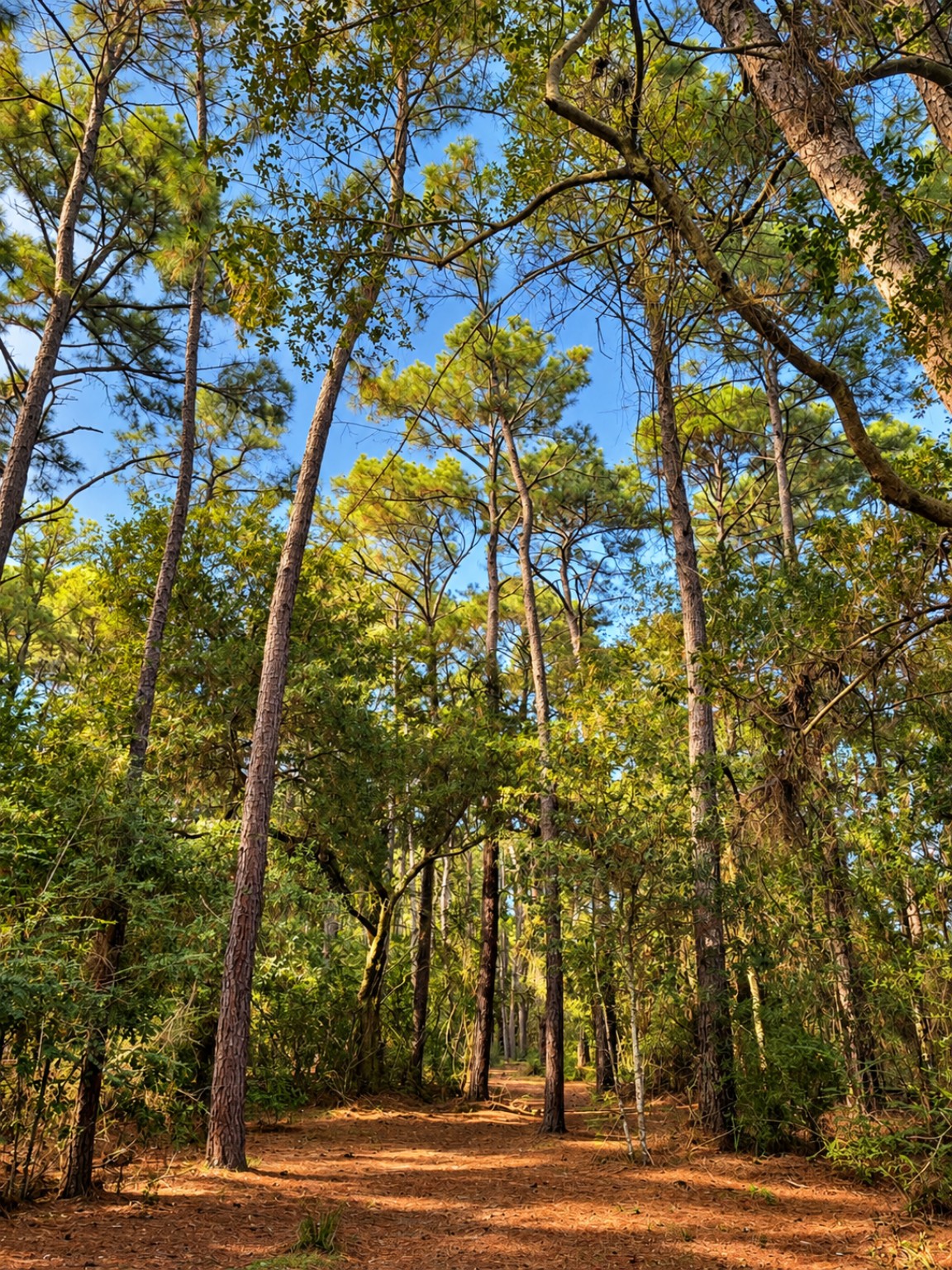
When I look at the photographs I brought home from Kleb Woods, the tall trees are what catch my eye first. The trunks, the sunlight, the canopy against the sky. They’re the reason I kept stopping with the camera.
But a paper from Big Thicket left me thinking about the smaller plants underneath.
Which ones will get the chance to grow? What might we miss if we only look up?
Seven years beneath the canopy
Siemann and colleagues’ 2009 study followed sixteen forest plots in Big Thicket’s Lance Rosier Unit for seven years. Eight were fenced to exclude hogs; eight remained open. Woody understory diversity was greater with exclusion. Large-seeded tree species responded positively, while invasive Chinese tallow saplings were more than twice as abundant where hogs had access. [1]
A different kind of damage
The authors suggest seed consumption and soil disturbance could change the future tree community. Those mechanisms help explain the findings, but the experiment did not follow the forest through to a replacement canopy. [1]
That’s the question that stayed with me: how do we recognize a change that may be taking place before the trees we expect to see have even grown?
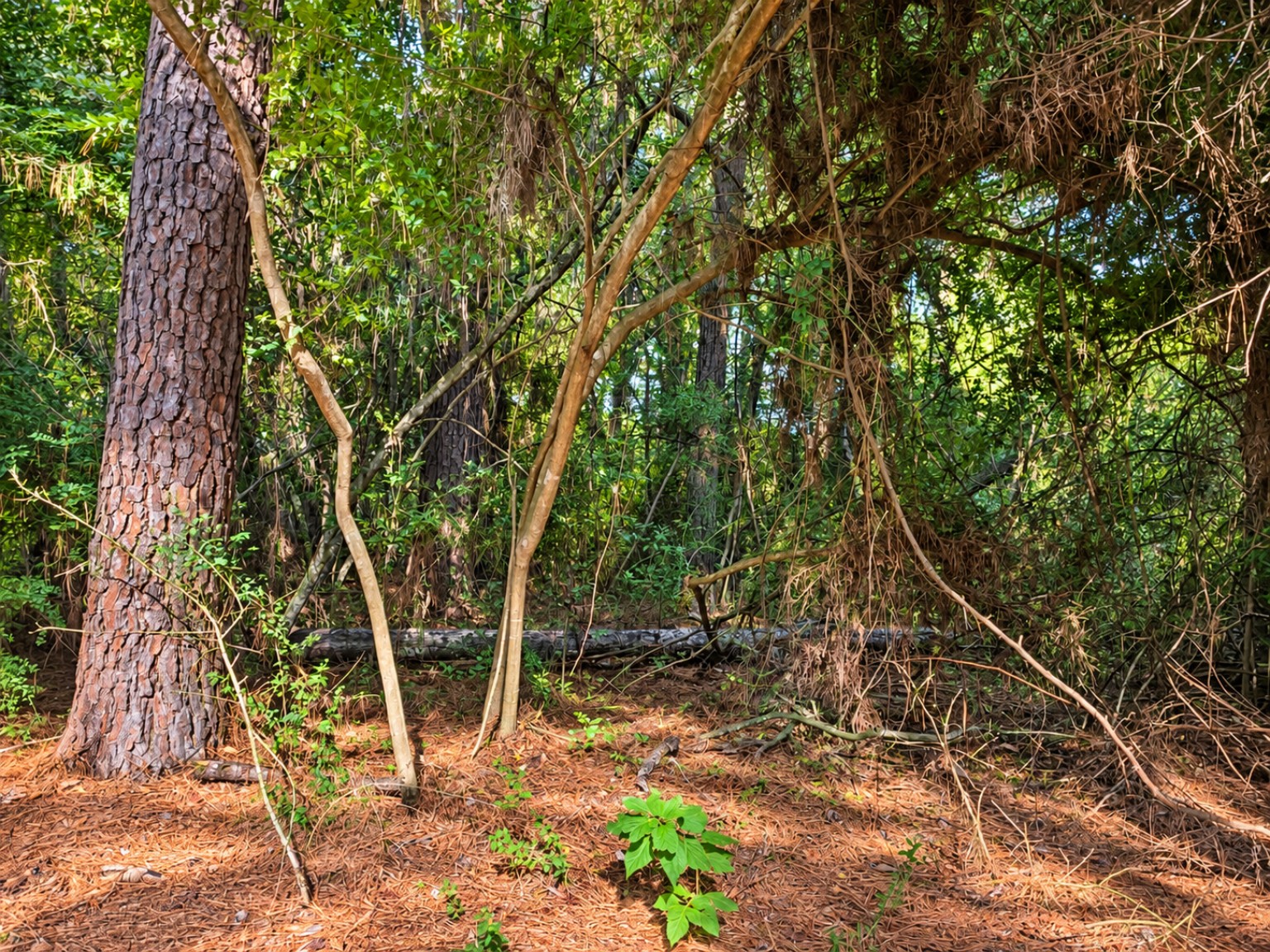
Torn-up ground makes an immediate picture. A missing opportunity for a young plant is harder to put in a photograph. It gives me another reason to pay attention to what’s happening beneath the canopy.
What this study can—and can’t—tell us
This was one historical experiment, not a current assessment of every Texas woodland. The authors note that fences may also have changed other animals’ foraging, potentially inflating the estimated hog effect. [1]
Our Kleb Woods photographs illustrate the question. They are not photographs of the Big Thicket study plots, identified seedlings, or measured hog damage.
A question to carry into the woods
On the next walk, I want to spend a little more time looking at the space between the larger trees.
What’s growing there? What would someone need to record and revisit to understand how it’s changing?
For Hog Watch, this is a useful direction for the research: looking at what we want a landscape to retain, and what evidence would show whether that is happening.
Source
Source reviewed .
- Evan Siemann, Juli A. Carrillo, Christopher A. Gabler, Roy Zipp and William E. Rogers (2009). Experimental test of the impacts of feral hogs on forest dynamics and processes in the southeastern US. Forest Ecology and Management 258, 546–553. DOI: 10.1016/j.foreco.2009.03.056 (new tab).
Original author-hosted PDF (new tab)