
Inside this edition · A note from Efrain & Kelly
Good questions
travel with us.
A lunch trip that became a day of listening, a warm welcome in Fayetteville, and a wildlife-filled walk at Sheldon Lake. Come along with us.
Fayetteville & the road there · October 10
We went for lunch.
The conversations made the trip.
Our October 10 trip started with a simple plan: visit Orsak’s Café in Fayetteville. With a drive ahead of us, we decided to make a day of it—bring our resource sheets, stop at a few businesses along the way, and ask people what they were seeing in their area.
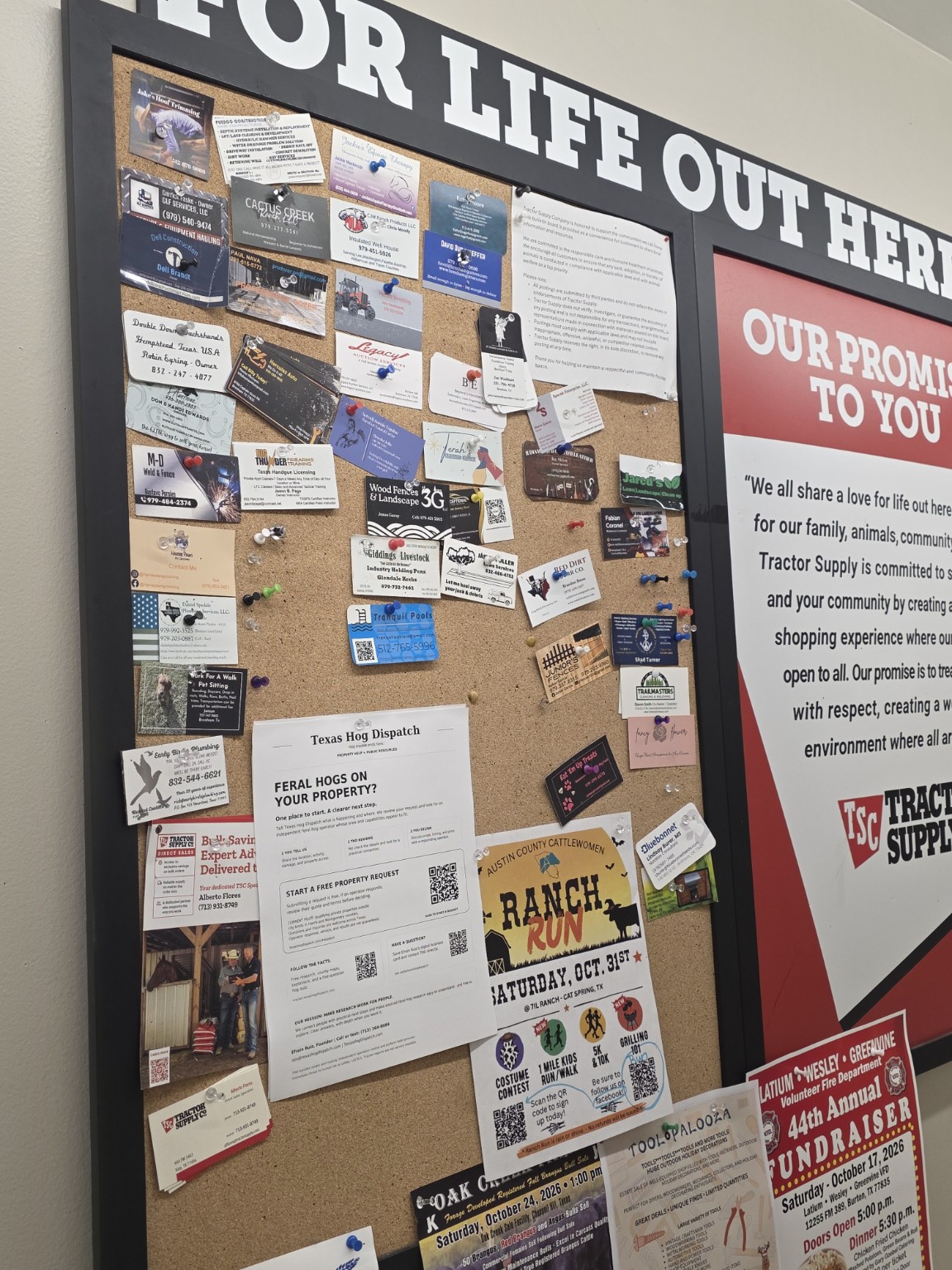
At places like Cattleman’s Supply and Brenham Produce, we spoke with managers and owners, introduced Texas Hog Dispatch and Hog Watch, and listened. Across every business we visited, the response was consistent: people described feral hogs as plentiful, familiar, and an ongoing local problem. Conversations with other locals echoed the same concern.
What stayed with us was how readily people talked about it. We weren’t introducing an unfamiliar issue; we were asking about something they already knew well. Those firsthand accounts gave us plenty to think about and more questions to bring back to our research.
A special thank-you to Tractor Supply for the warm welcome and space on the community bulletin board. We’re grateful to everyone along the route who made time for a conversation and helped us put useful information within reach.
Fayetteville through our lens
Before lunch,
a little time to explore.
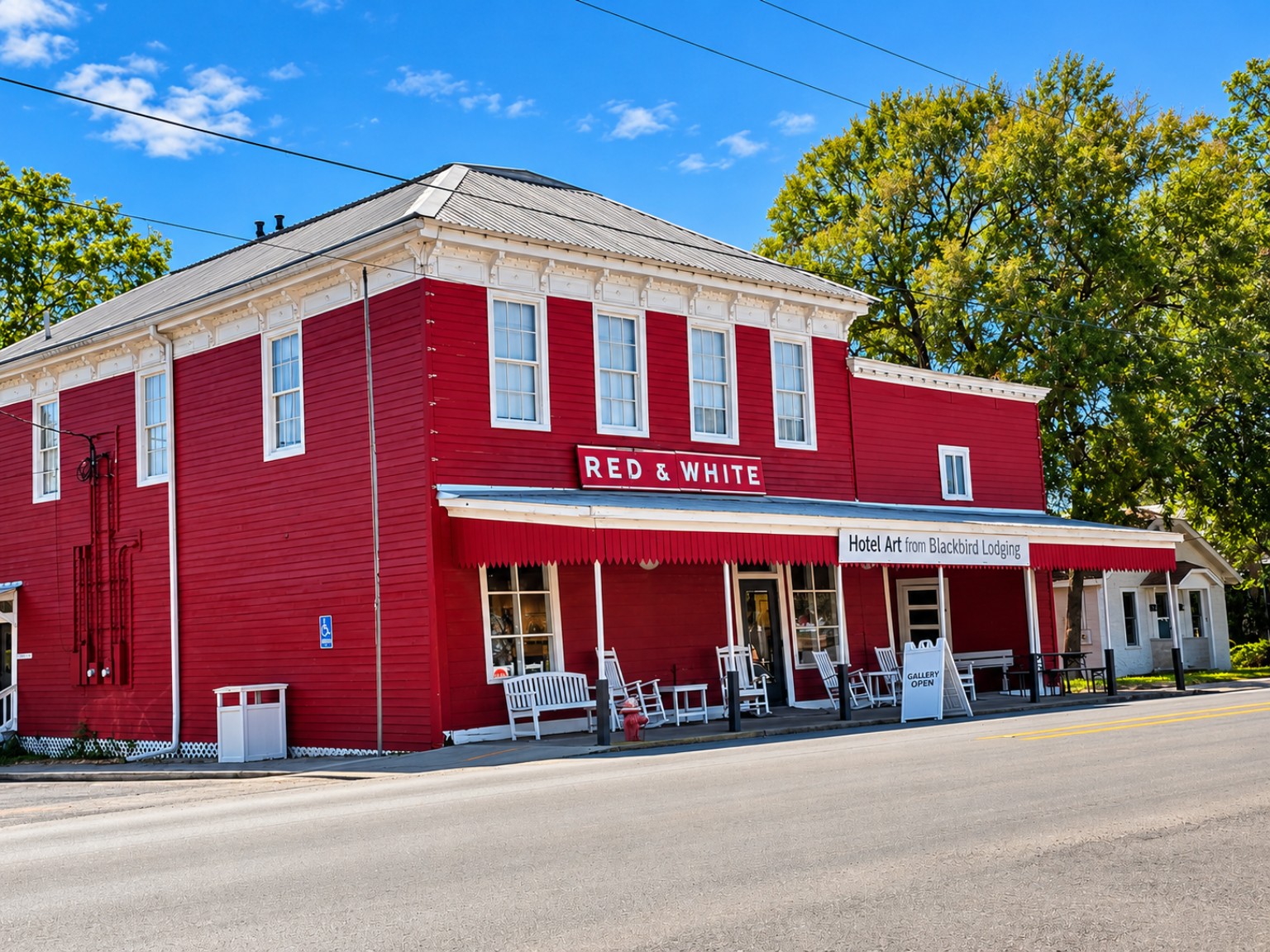
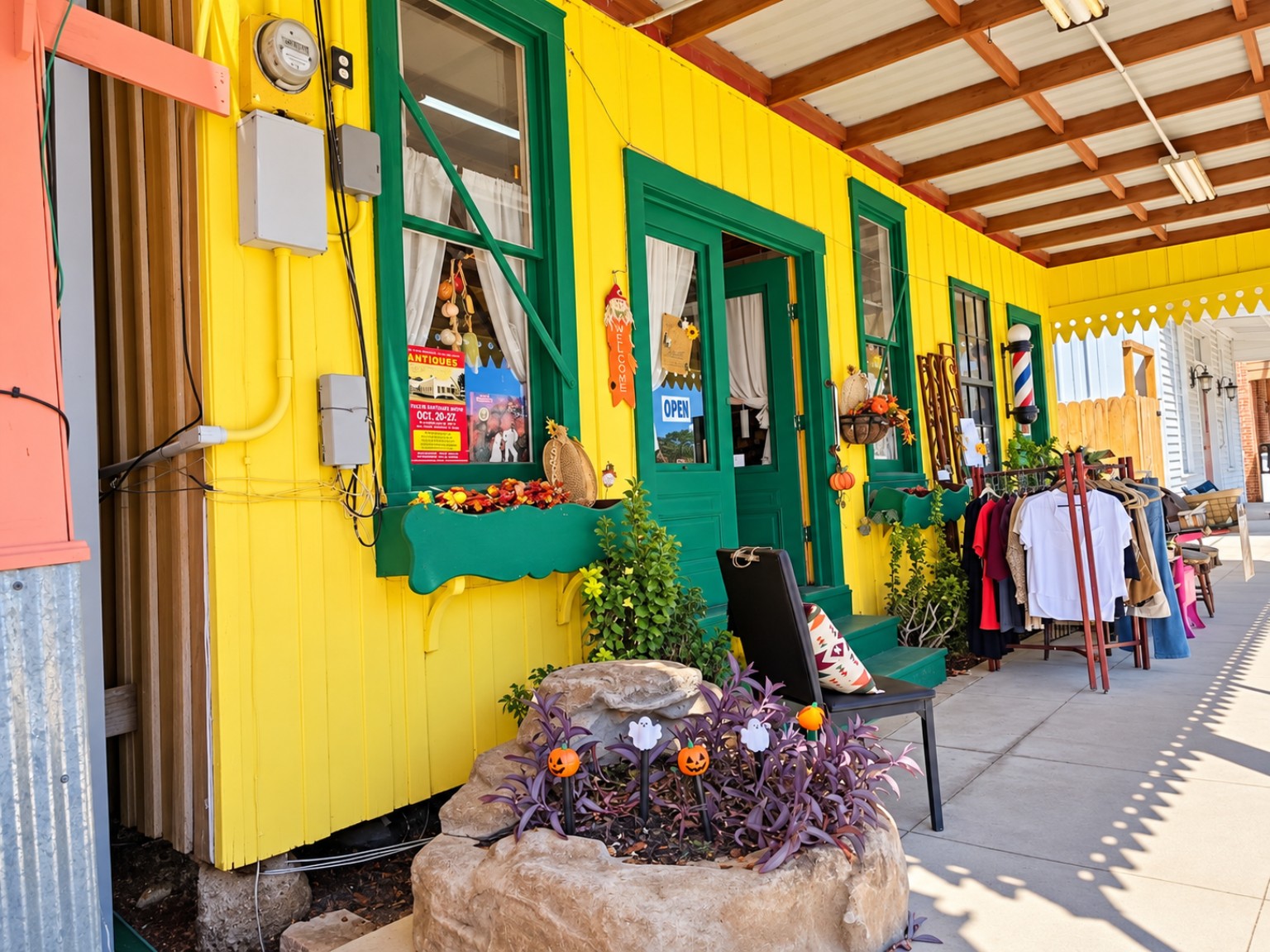
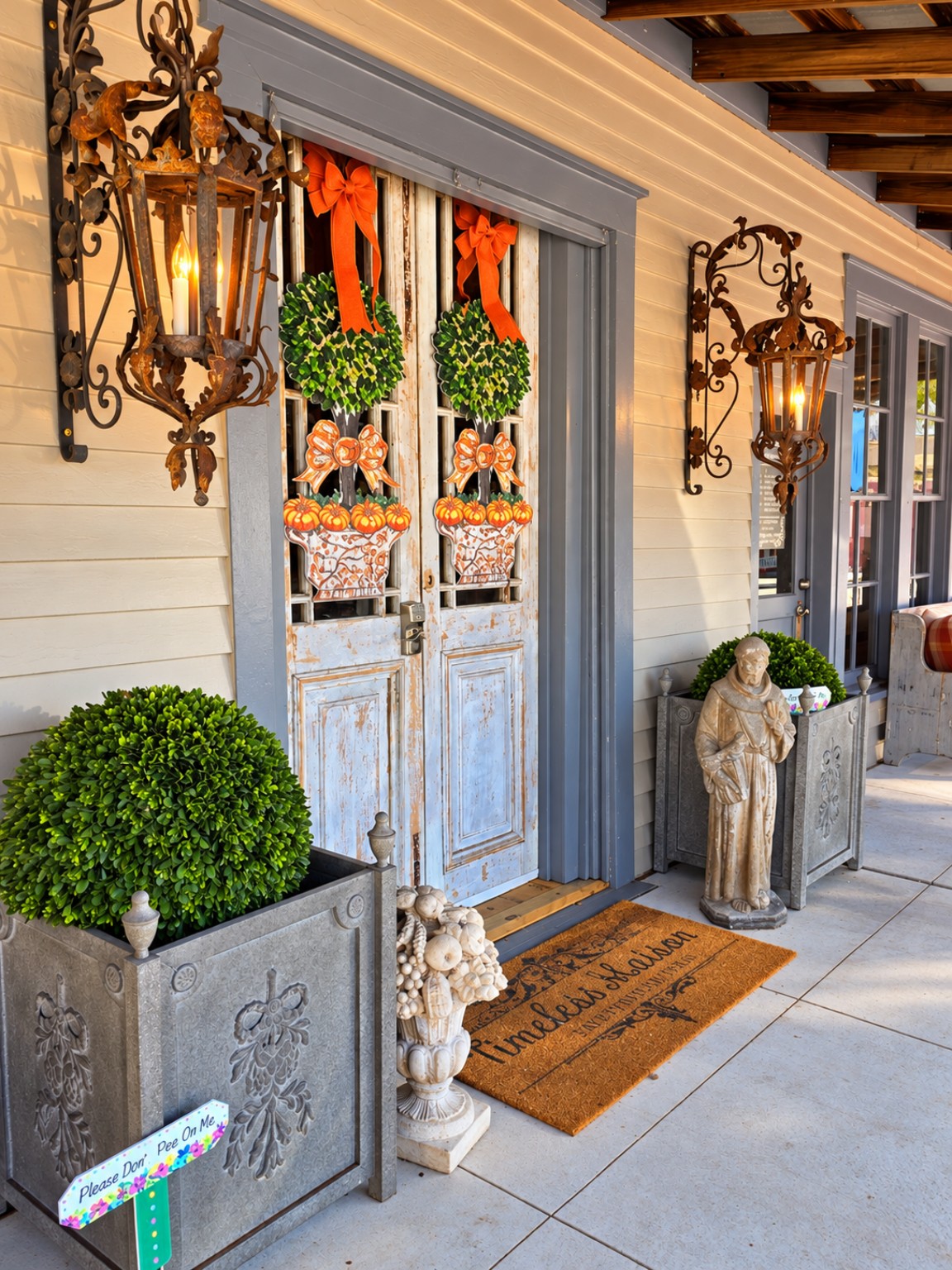
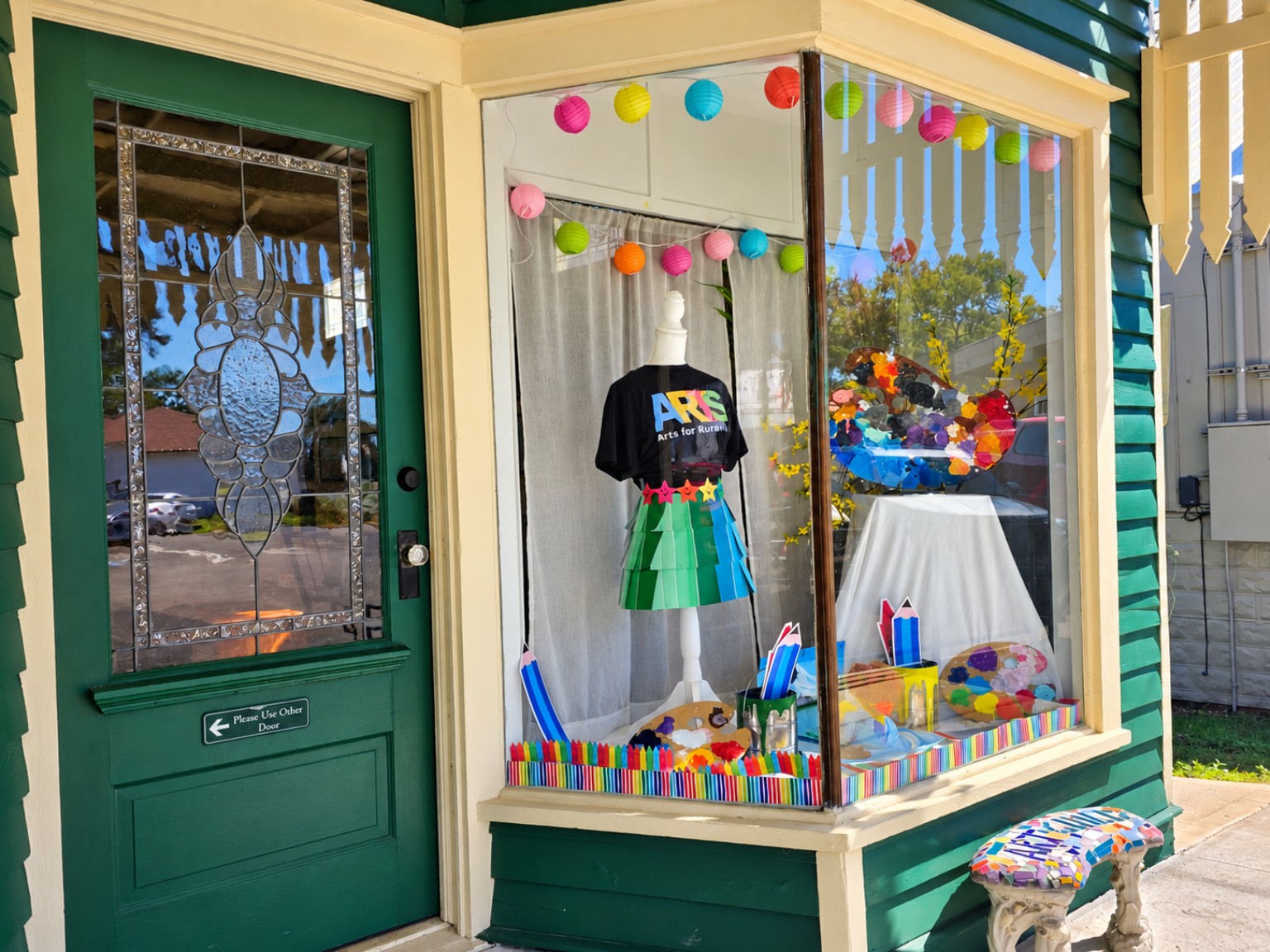
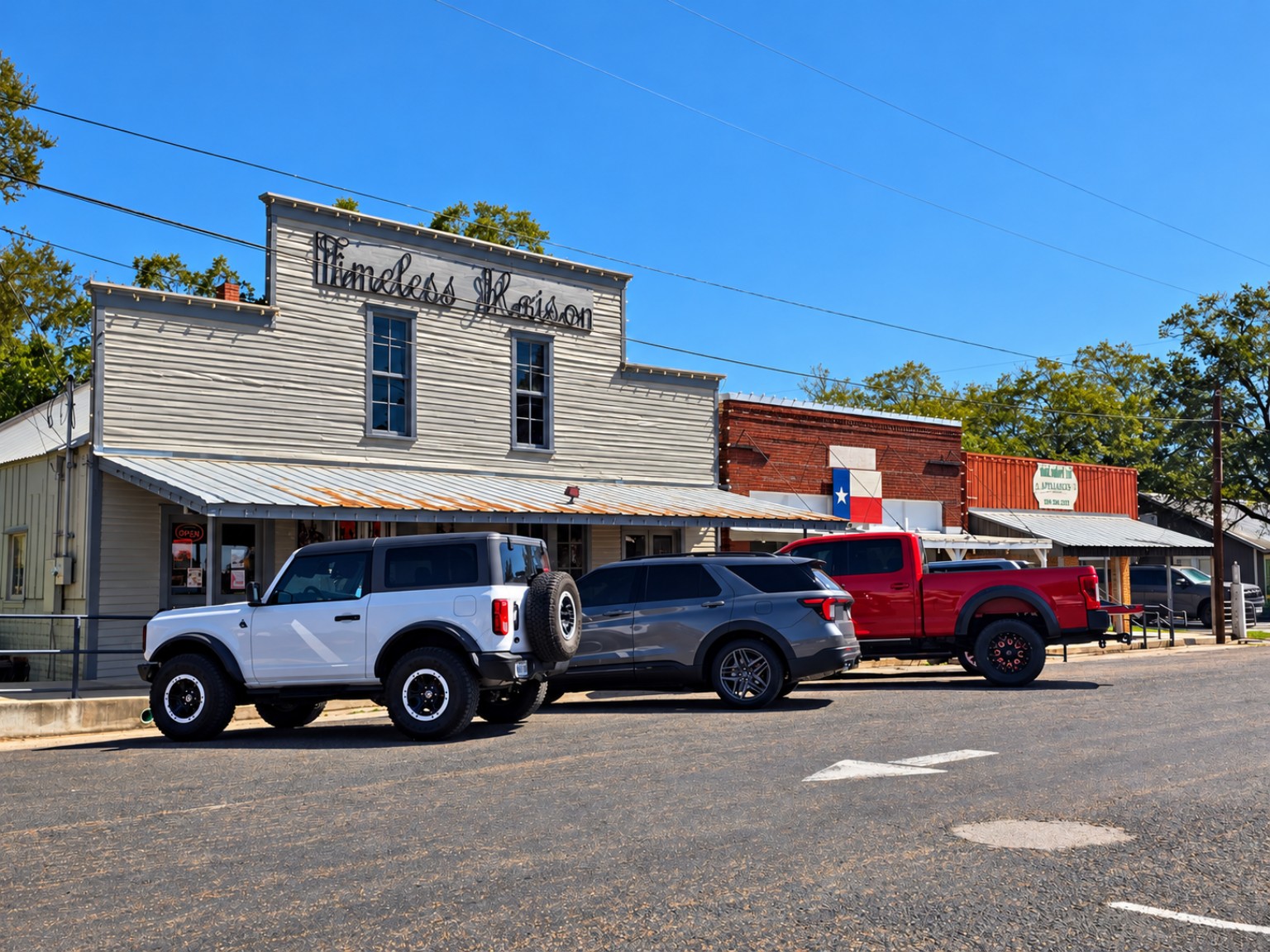
When we reached Fayetteville, we took a walk before sitting down to eat. The town’s historic character, colorful storefronts, and carefully kept details gave us plenty of reasons to slow down and bring out the camera.
The Red & White building, an art-filled shop window, and the Timeless Maison frontage each gave the walk a different splash of color. Here’s a little of what caught our eye.
A seat at Orsak’s
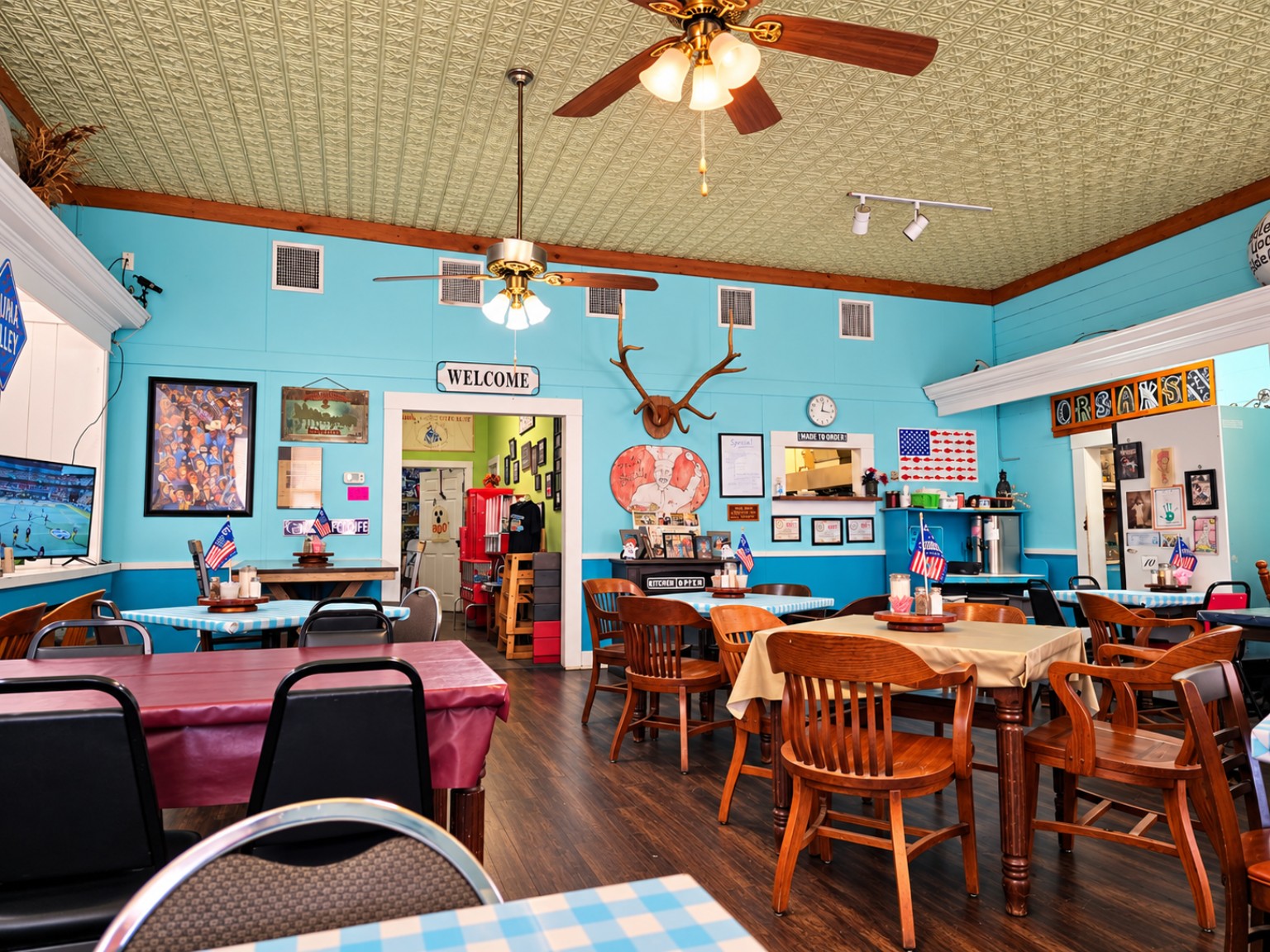
Blue walls. Checkered tables.
A moment to take it in.
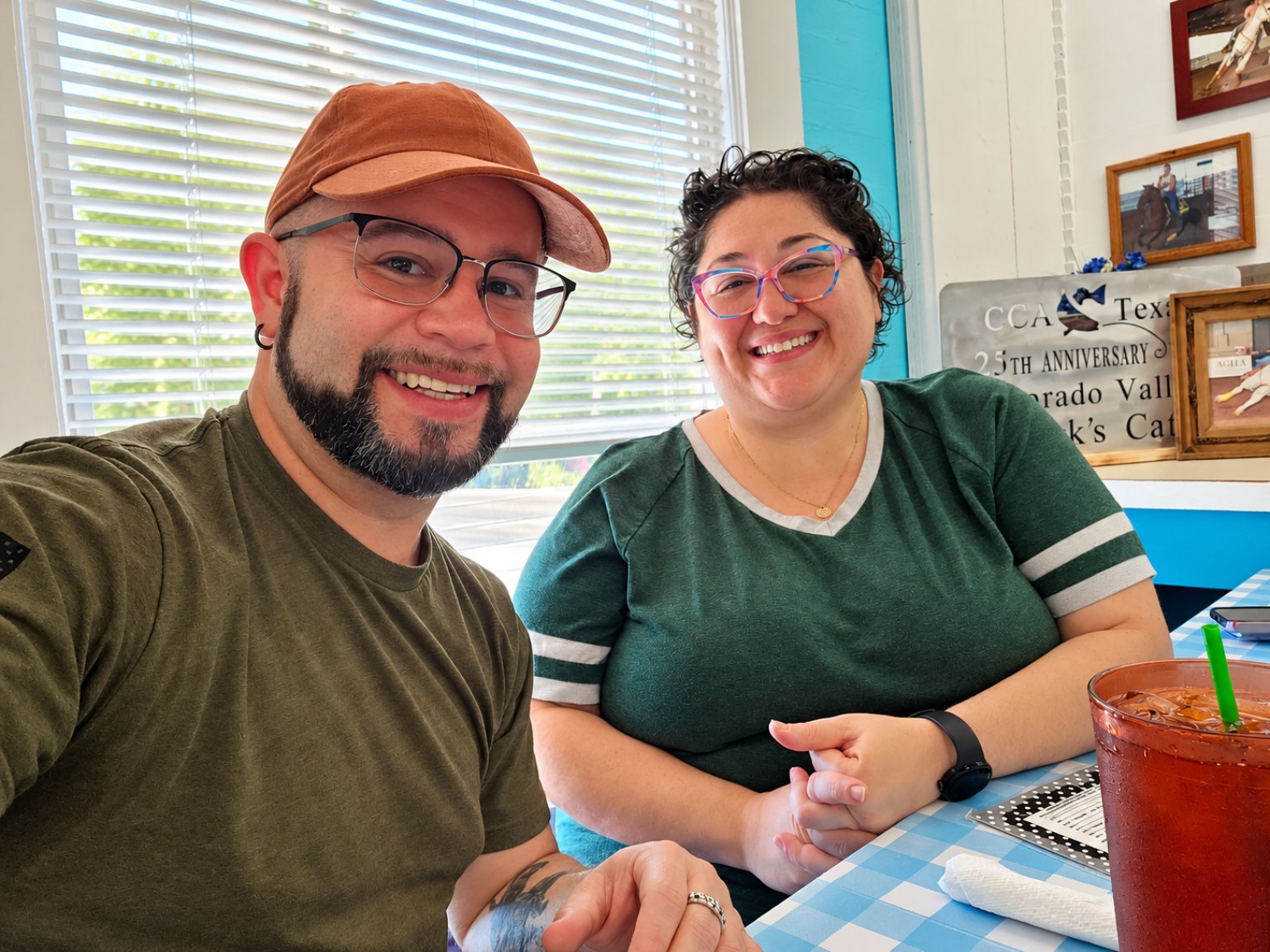
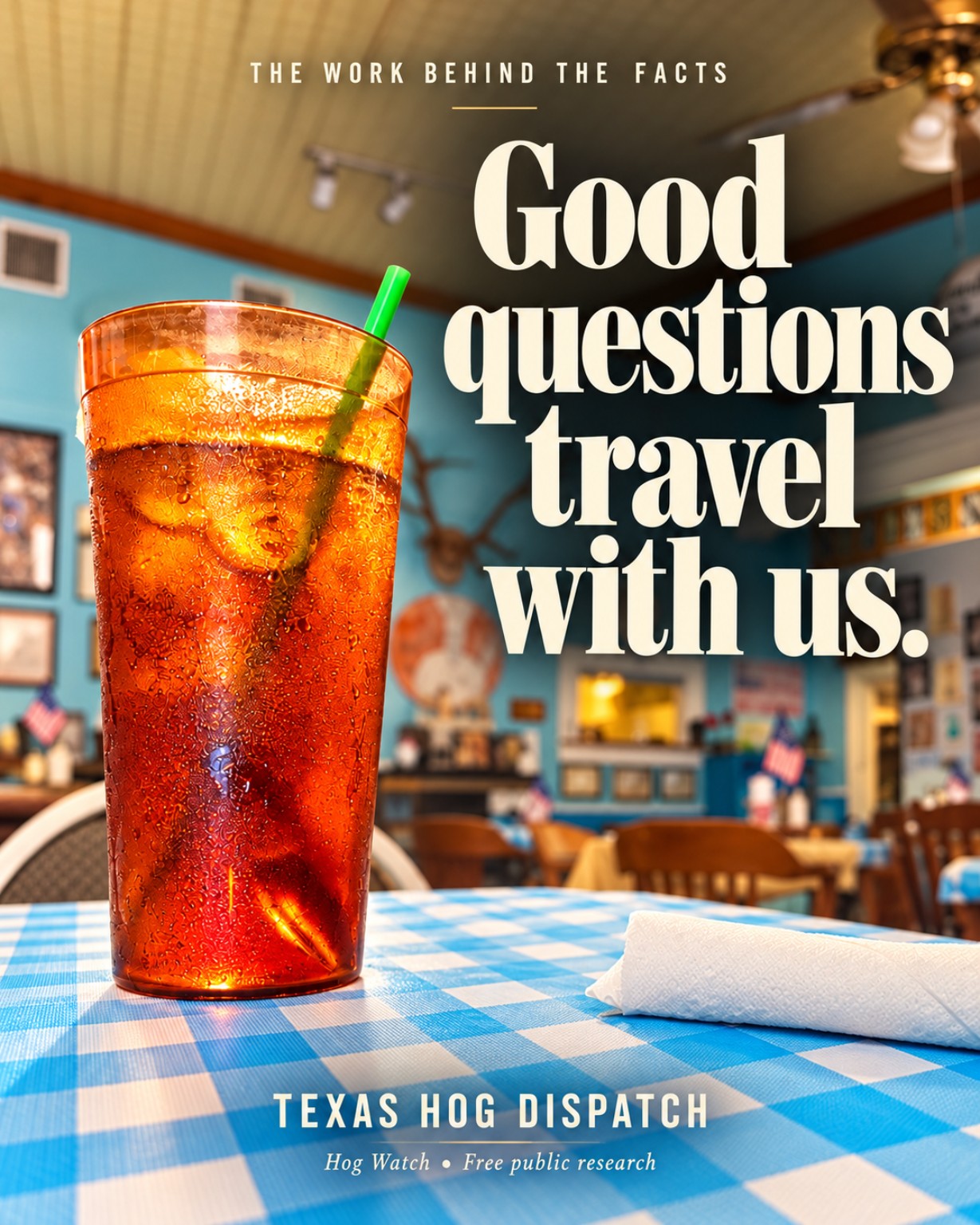
Our café photographs hold a different part of the day: the two of us at the table, an iced drink catching the light, and a room filled with framed photographs and local character.
It was a place to sit down during the trip—and, as it turned out, the place where a helpful suggestion set the next conversation in motion.
A helpful suggestion
One conversation
opened another door.
At Orsak’s, we struck up a lovely conversation with our server, whose name happened to be Kelly too. She pointed us toward the bank and the community center as places with bulletin boards where we could share our information.
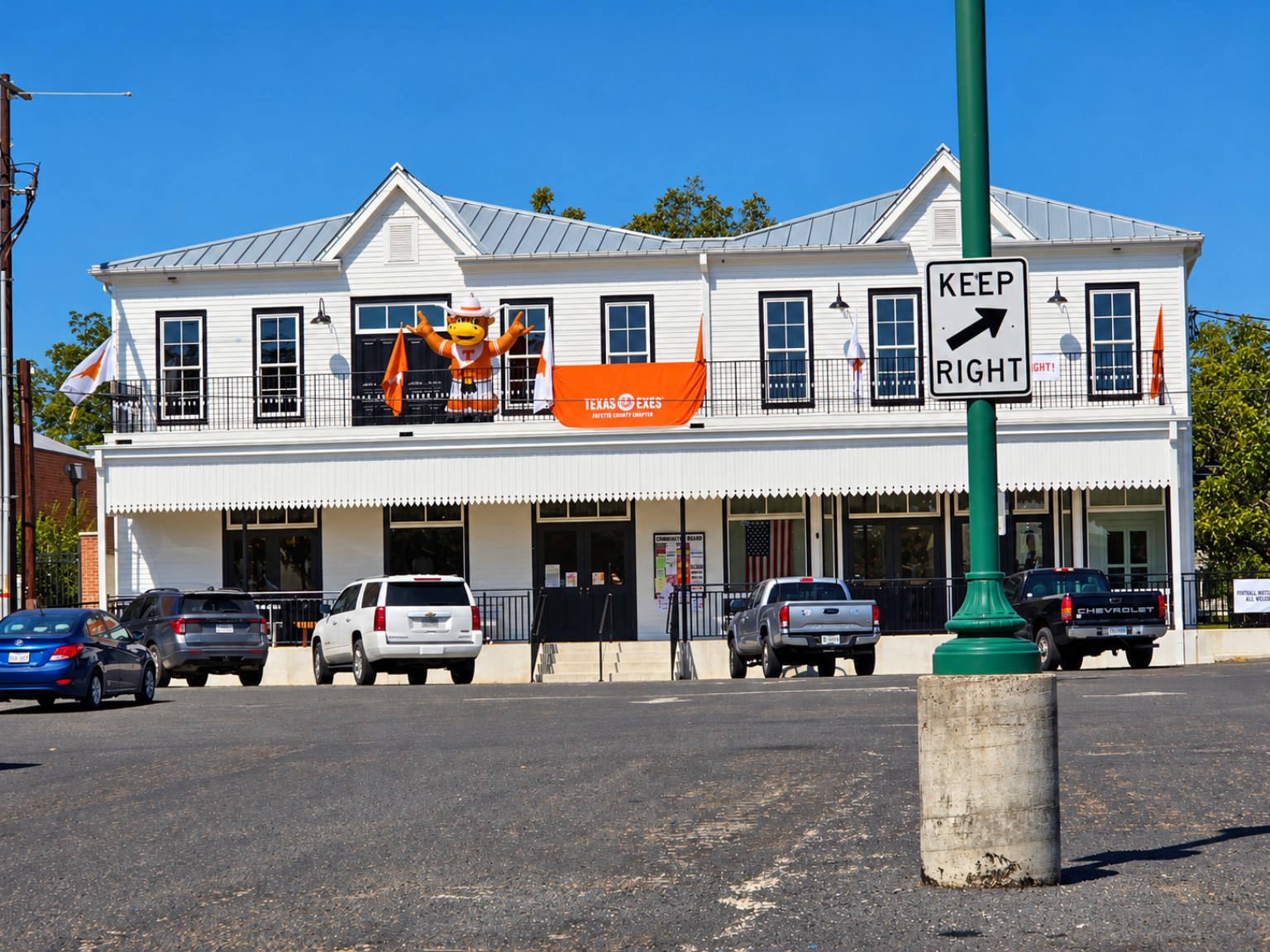
That suggestion led us to the Fayetteville Community Center & Performance Theater and a warm welcome from Dr. Crystal Gully. Her interest in education gave us plenty to talk about, and she took time to hear about our research and the work we’re building.
A conversation worth continuing
A warm welcome.
Room for what comes next.
Dr. Crystal was kind, approachable, and enthusiastic about what we shared. She accepted our information, and we discussed possibilities for future events. Those conversations are still ongoing; we’re looking forward to seeing where they lead.
What began as a trip for lunch became a day of useful introductions, generous conversations, and a clearer sense of the concerns people share across the area. It was well worth the drive.
Earlier this month · Sheldon Lake · October 2
A place that
feels alive.
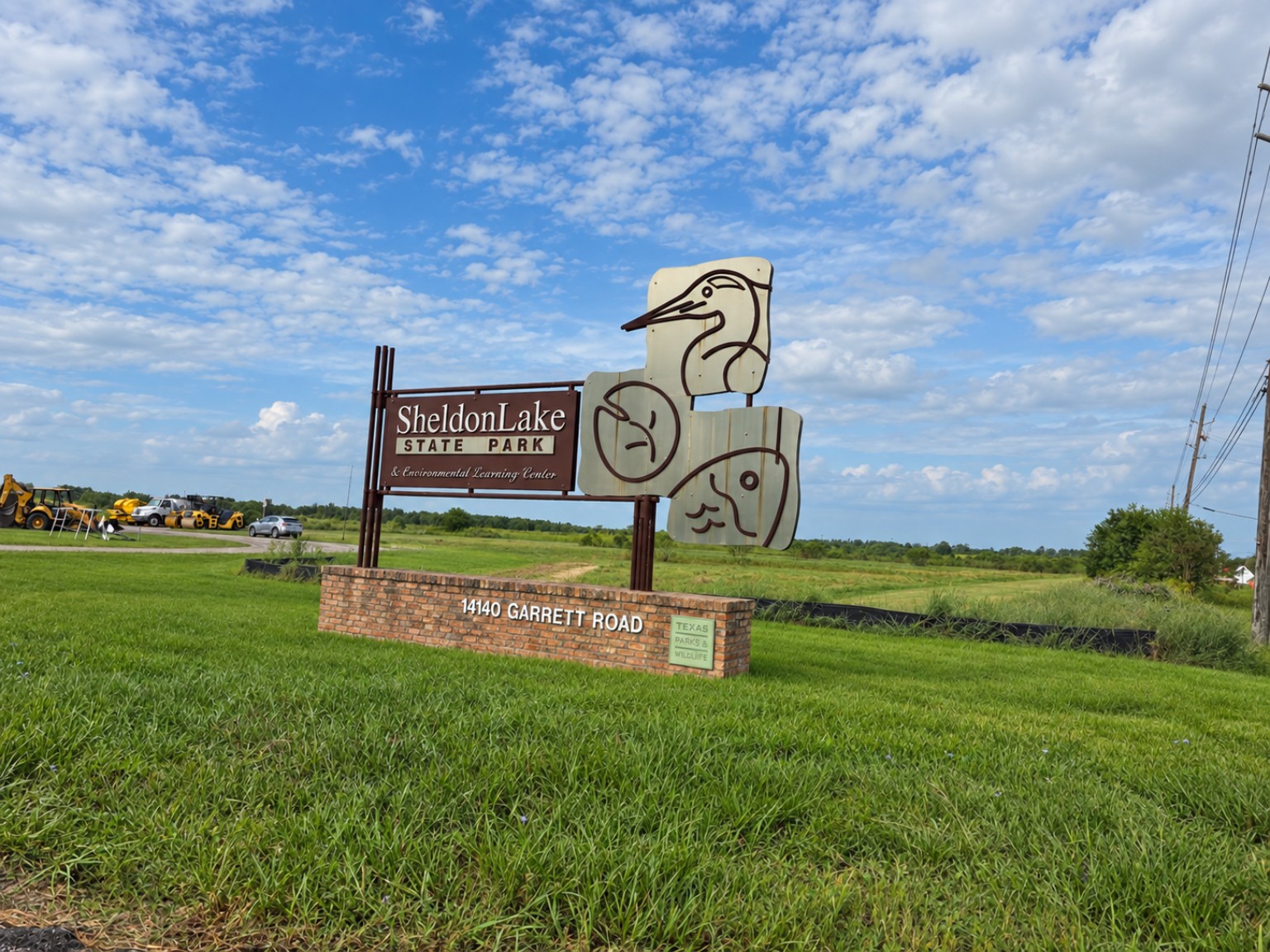
Our visit to Sheldon Lake State Park & Environmental Learning Center began with a conversation with Texas Parks and Wildlife park rangers. Before heading onto the trails, we wanted to hear what they were seeing and learn more about the area.
The rangers told us feral hogs remain active there, with activity more noticeable in the evening and at night than during the day. They described a past period when the problem became severe enough that professional operators were brought in to address it.
According to the rangers we spoke with, activity still rises and falls, but it had been several years since it reached that overwhelming level. What they described was an ongoing presence with a changing level of activity.
We shared our one-pagers and explained the work behind Texas Hog Dispatch and Hog Watch. Staff welcomed the information and said they wanted to share it internally. We left that conversation with useful local context and an appreciation for their time.
Out on the trails
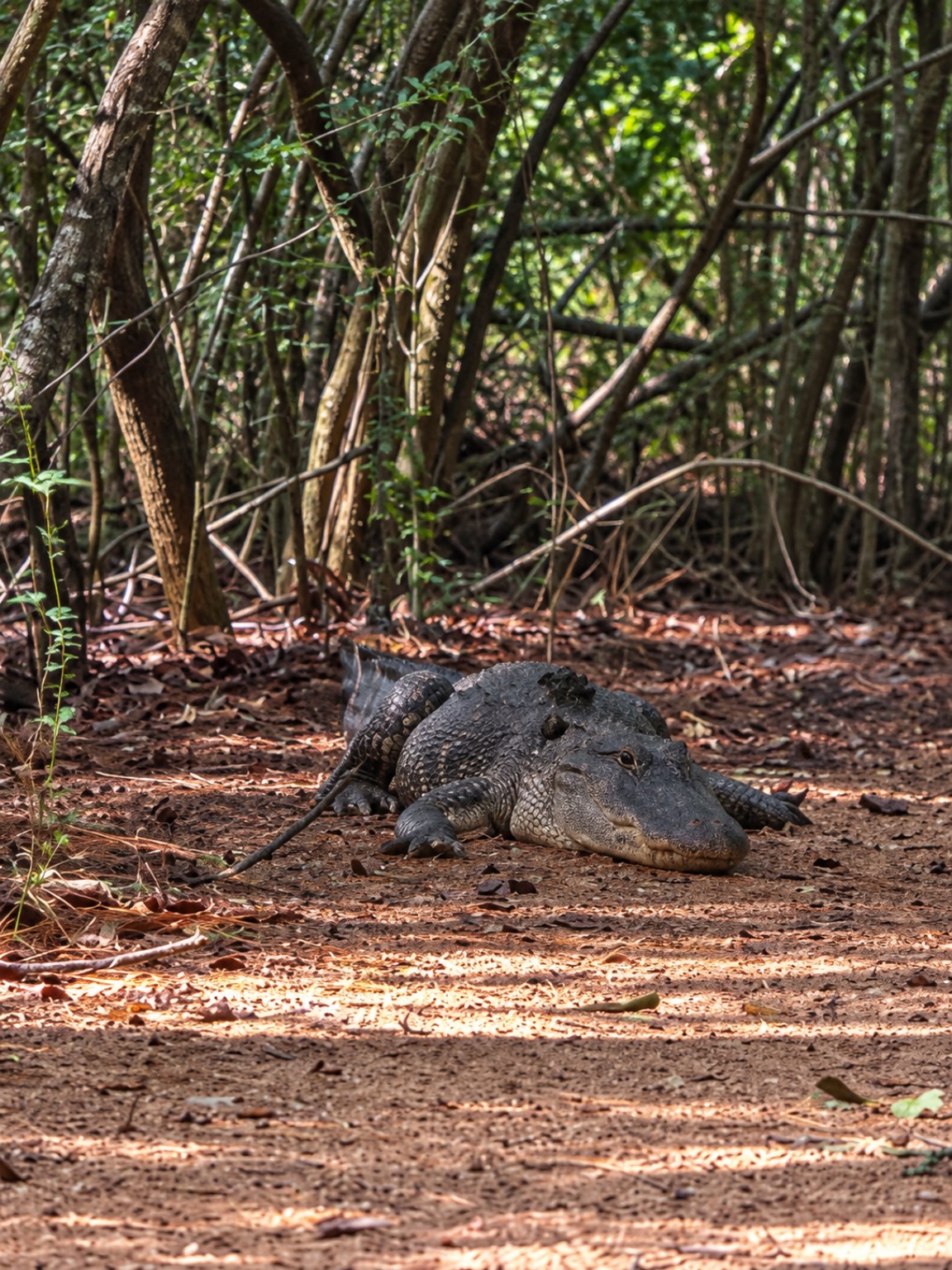
The gator had
that end of the trail.
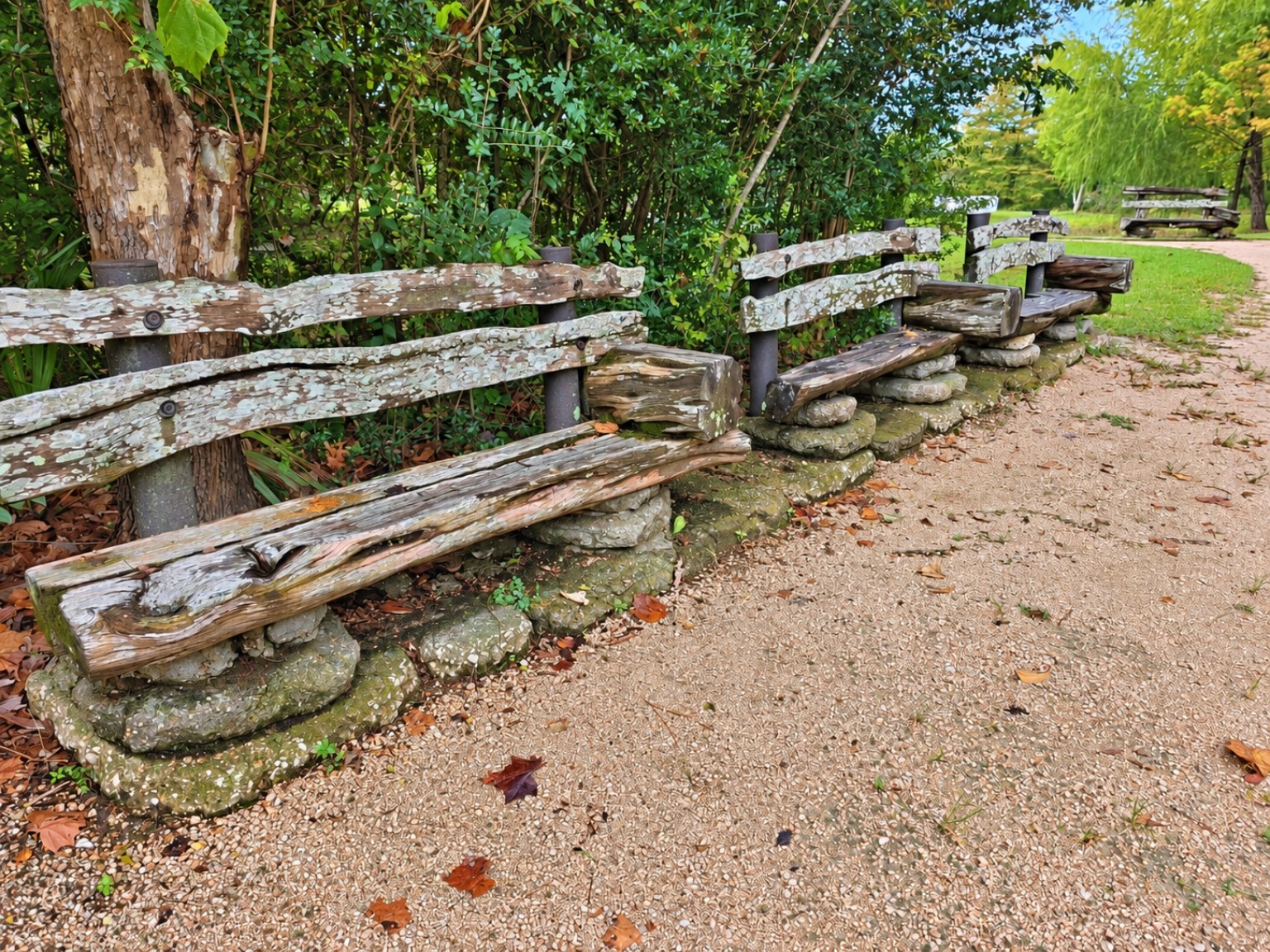
After talking with the rangers, we headed into the park. At the end of one trail, we encountered an alligator. We took a couple of photographs, turned around, and continued exploring elsewhere.
It was a memorable reminder that the wildlife here moves through the same landscape we’re walking through. Even the paths can be part of an animal’s day.
Life in the details
There was always
something else to notice.
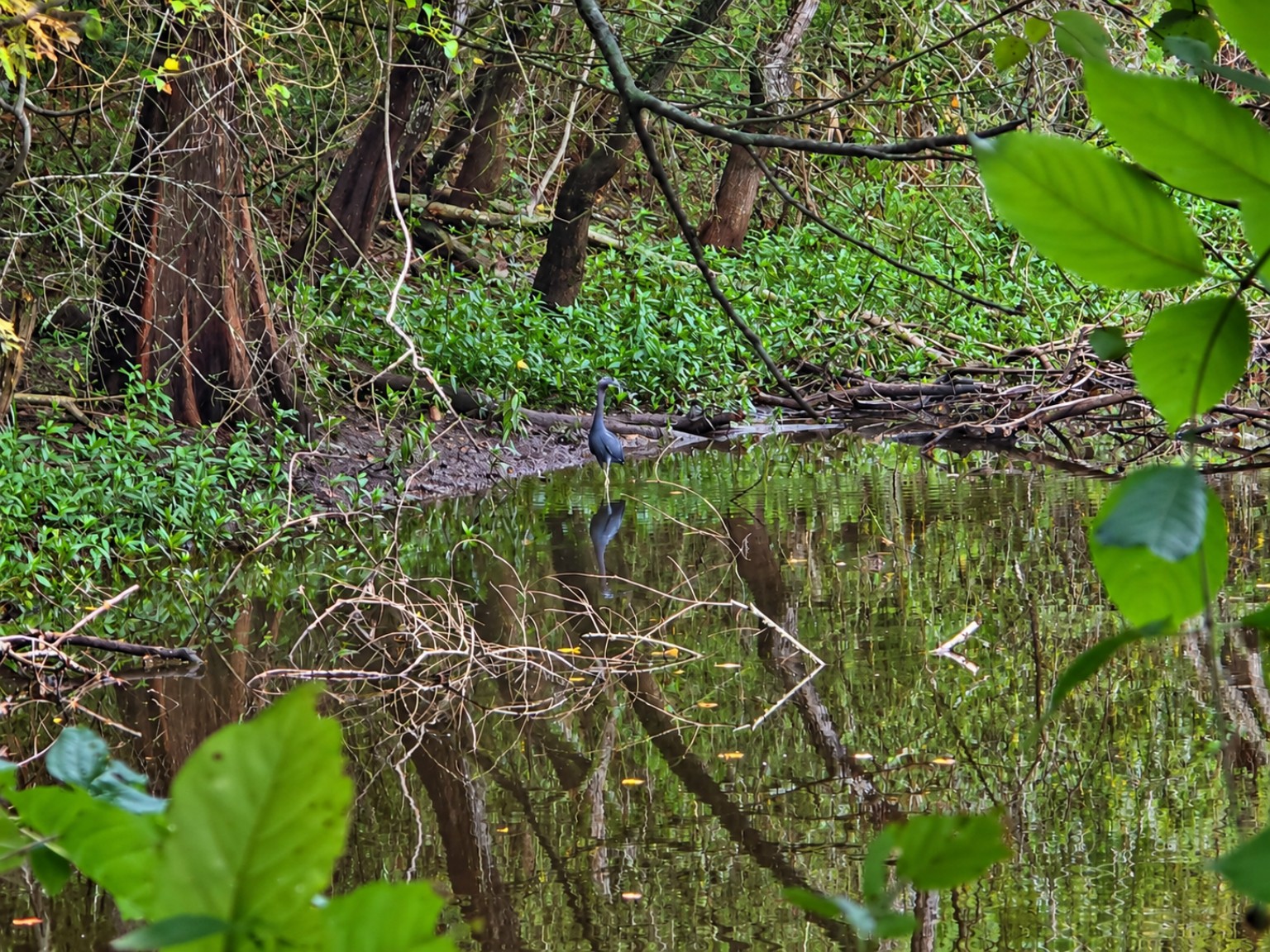
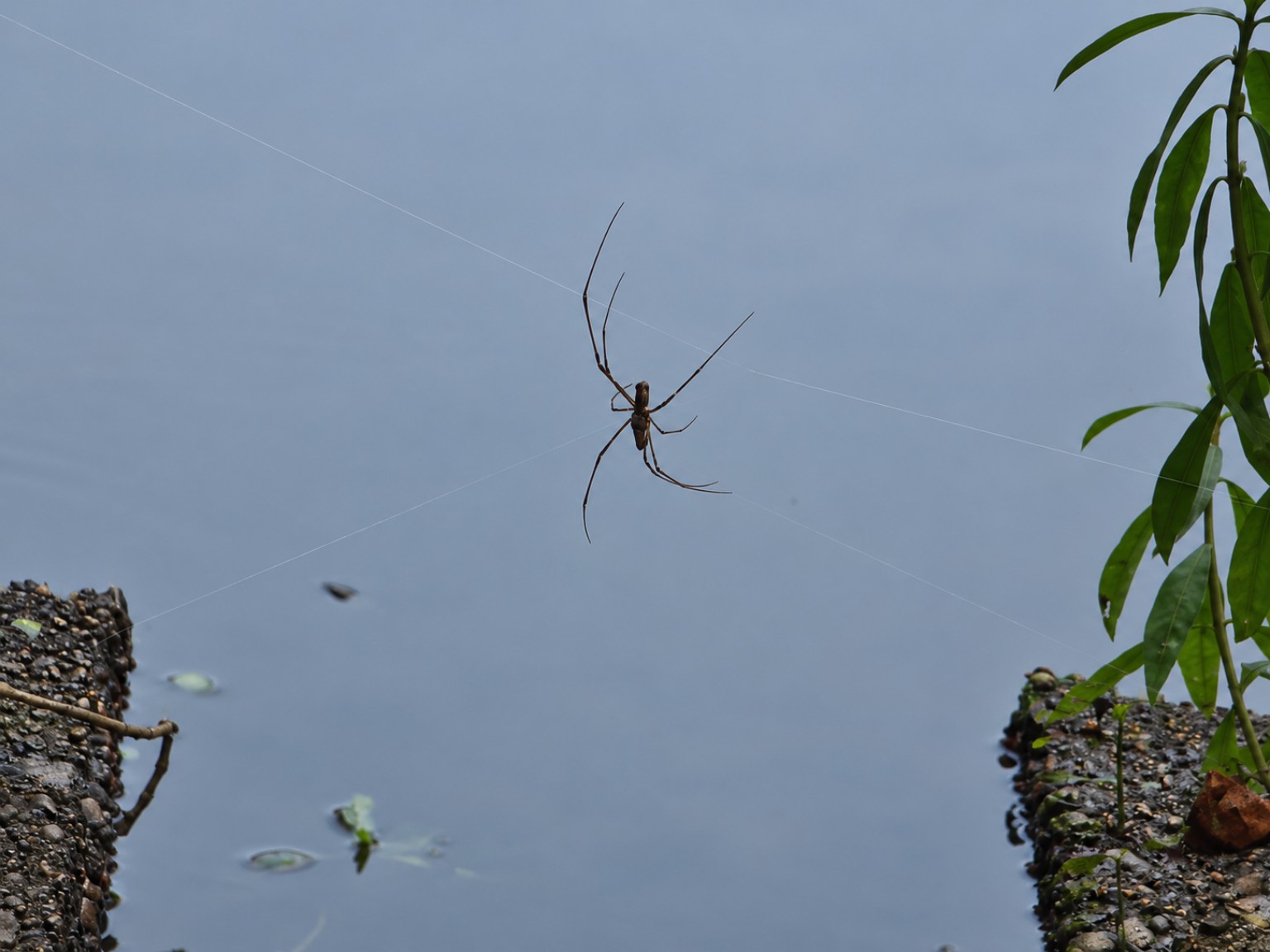
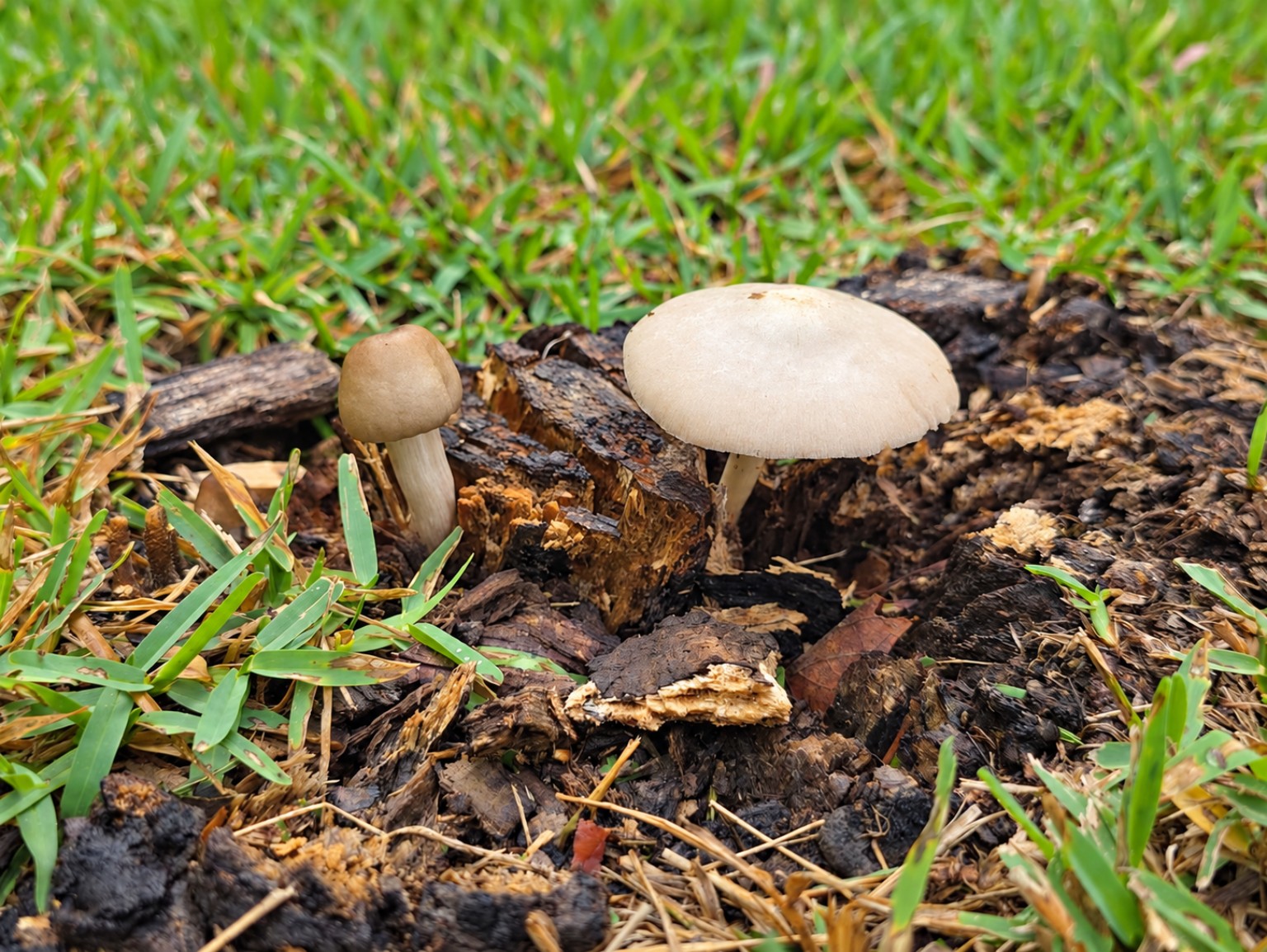
Elsewhere in the park, we spotted a blue heron, orb-weaver spiders, and armadillos. Around them were lily pads, dense greenery, and mushrooms growing from old wood. Some moments called for a photograph; others simply made us stop and look.
That’s what stayed with us most: how alive the place felt. From a bird standing quietly in the water to a spider suspended in its web, there was so much happening at different scales.
A reason to keep looking
Curiosity belongs
out here, too.
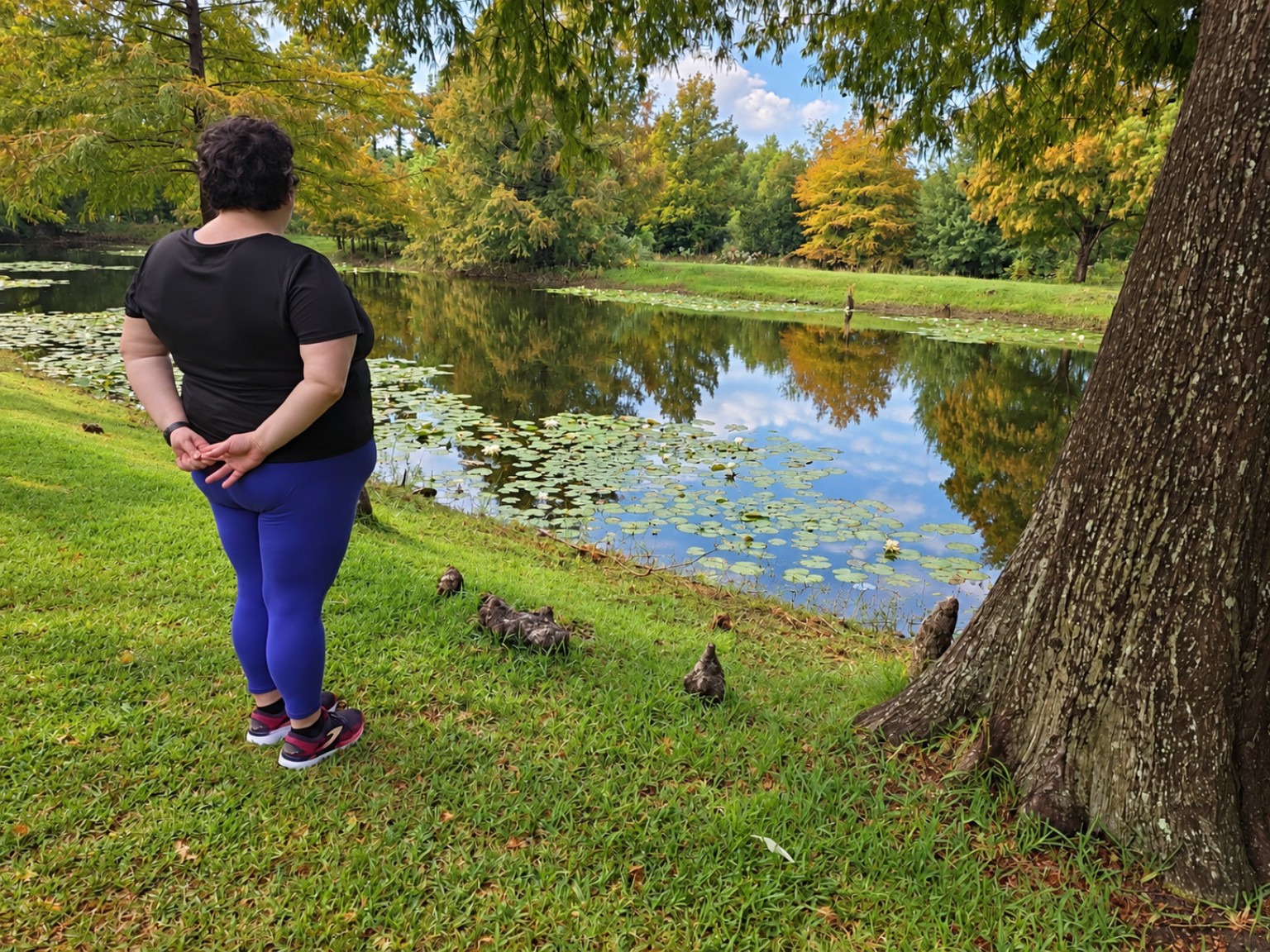
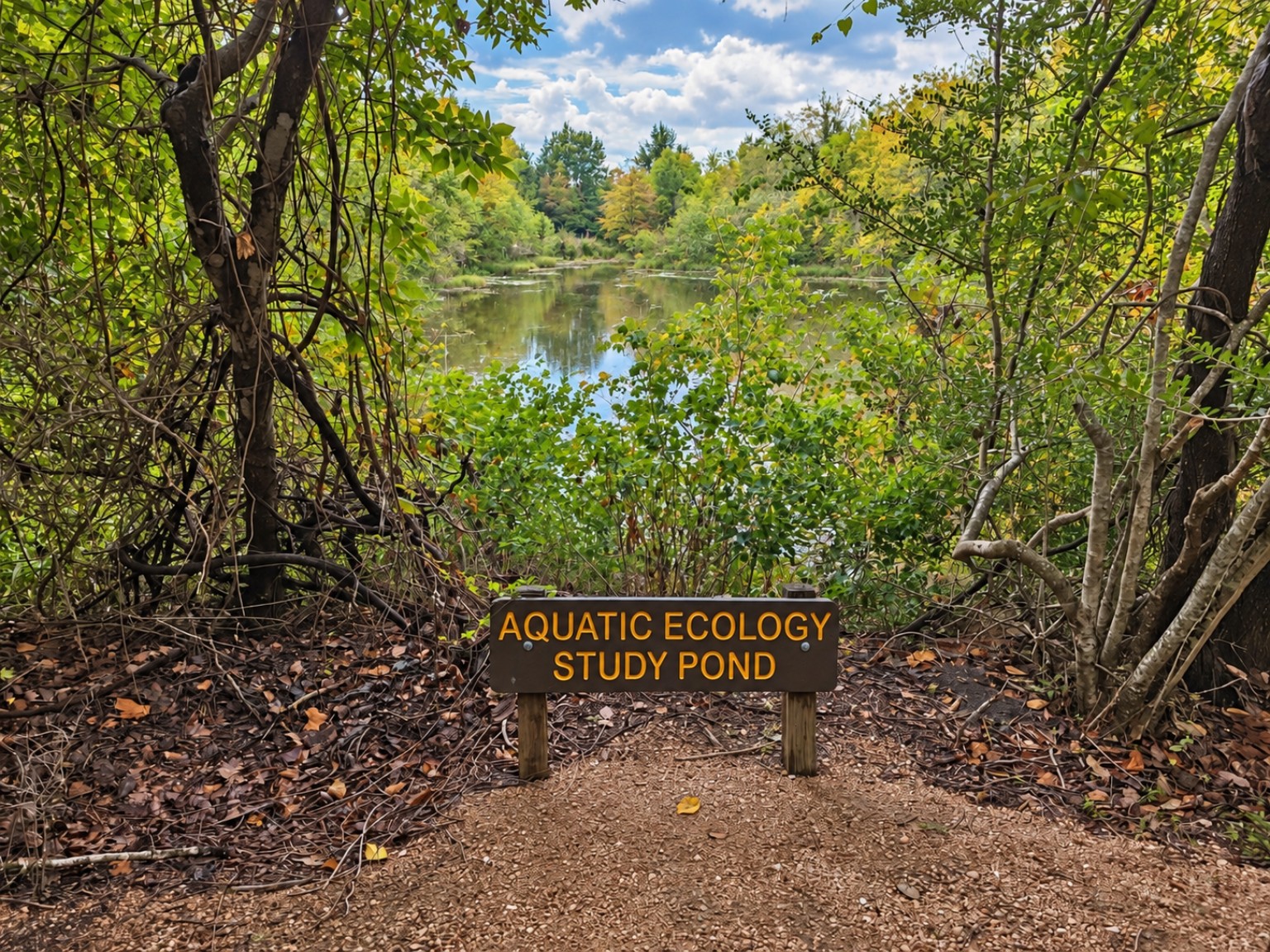
A sign marking an Aquatic Ecology Study Pond brought the learning side of the visit into view. Between the conversation with the rangers and the details along the trails, Sheldon Lake gave us plenty to observe, ask about, and take home to think over.
For us, the visit brought two parts of Hog Watch together: listening to people with local knowledge and taking the time to notice the places around us. We came away with photographs, new questions, and a deeper appreciation for a park that feels very much alive.
What we’re taking forward
Better conversations.
More useful questions.
Hog Watch is our free research and education resource. Trips like these help us introduce it, learn what people want to understand, and look for useful ways to share what we’re learning.
Texas Hog Dispatch handles the connection to independent operators. Hog Watch gives people a place to explore the information. Both begin with listening carefully and being clear about what we can offer.
We’re grateful to everyone who took a few minutes to hear us out, accepted a resource sheet, or pointed us toward the next conversation.
Meet the people behind Hog Watch →A question for you
Where should the next
conversation happen?
Do you know a community space, a useful bulletin board, or a local group that would appreciate free feral-hog information? We’d love to hear about it.
And if Fayetteville or Sheldon Lake is familiar ground for you, what’s a detail we should notice next time?
Thanks for coming along,
Efrain & Kelly